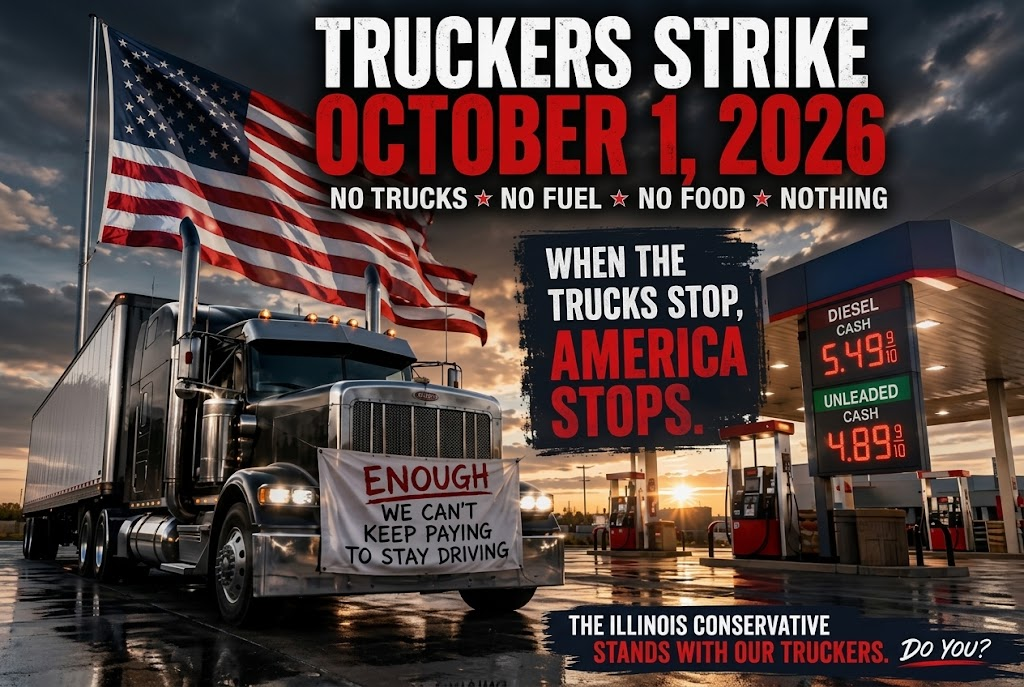
Look closely at the warning signs taking over social media feeds and independent trucker forums. Graphics calling for a nationwide freight shutdown, wildcat strikes, and park-outs are spreading fast. The message printed on the side of that semi-truck says it all: “ENOUGH. We can’t keep paying to stay driving.”
Whether a full-scale strike materializes overnight or the freight industry simply buckles under the weight of $5.50+ diesel, regulatory pressures, and razor-thin operating margins, one undeniable fact remains: America operates on a three-day, just-in-time logistics loop.
When trucks stop moving, America stops eating.
For the average consumer who relies entirely on the local supermarket meat counter, a freight disruption is a catastrophe. But for preppers, homesteaders, and self-reliance minded families, this isn’t just news—it is a wake-up call to audit your food security. When the commercial food grid collapses, having a pantry full of rice and beans isn’t enough. Your body needs dense, high-yield protein and fats to survive and thrive.
Here is what happens to the cost and availability of food when freight grinds to a halt, and why securing your own local protein line is the ultimate insurance policy.
The Domino Effect: How a Freight Stoppage Destroys the Meat Supply
The modern grocery store does not maintain a warehouse in the back room. Items are delivered daily on refrigerated trailers. The commercial meat industry—beef, pork, and poultry—is the single most fragile link in this chain because it depends on an unbroken “cold chain” from farm to slaughterhouse to distribution hub to store shelf.
When freight transport is interrupted, the impact on food pricing and availability unfolds in three rapid phases:
Phase 1: The Pre-Crisis Surge (Days 1 to 2)
As news of a truck park-out or fuel strike spreads, panic buying begins immediately. Retailers facing soaring spot-freight rates to move remaining inventory are forced to pass those costs directly to consumers. Store-bought ground beef, chicken breasts, and pork chops see instant 30% to 50% price spikes.
Phase 2: The Cold-Chain Freeze (Days 3 to 7)
Refrigerated trucks sit idle at truck stops. Meat processing facilities run out of storage capacity and are forced to pause operations. Livestock farmers, unable to ship animals or receive bulk feed deliveries, face devastating losses. At the grocery store, the fresh meat counters go completely empty. The small amount of remaining frozen protein commands astronomical prices—$15 to $20 a pound for basic cuts.
Phase 3: The Long-Term Inflation Surcharge (Weeks to Months)
Even after trucks start rolling again, the damage is done. Cled herds, interrupted breeding cycles, and bankrupt independent logistics companies create a long-term supply deficit. Meat prices do not return to pre-crisis levels; they stay permanently elevated, pricing millions of working families out of fresh protein.
Why Preppers and Homesteaders Must Pivot to Small Game
Most preparedness plans focus heavily on stored grains, freeze-dried meals, and big-game hunting. While those have their place, they each carry critical flaws during a prolonged domestic crisis:
- Freeze-Dried & Stored Grains Lack Fresh Fats: Carbohydrates keep you alive, but animal fats and complete proteins keep your mind sharp, your immune system strong, and your body capable of hard physical labor.
- Big Game Hunting is High-Risk: Firing a rifle in nearby woods during a societal crisis announces your location, burns precious calories walking miles on foot, and yields hundreds of pounds of meat that will spoil rapidly if you don’t have electricity for deep freezers.
- Livestock Requires Feed Logistics: If you keep chickens or pigs on a small homestead, a freight shutdown eventually cuts off your access to commercial feed bags.
To build true food independence when the grid and logistics fail, you need a system that is silent, continuous, low-cost, and non-reliant on commercial inputs.
That solution is small game trapping and snaring.
The Silent Food Factory: 110 Body Grips and Cable Snares
Small game—rabbits, squirrels, raccoons, woodchucks, and muskrats—exists in massive numbers right outside your back door, in suburban woodlots, fence lines, and agricultural edges. They represent an untapped, highly renewable food source that doesn’t care about diesel prices or political strikes.
By deploying a targeted trapping line, you turn the local wilderness into a 24/7 food gathering system that works while you sleep, work your garden, or protect your home.
The Power of the 110 Body Grip Trap
For small game animals like rabbits and squirrels, the 110 body grip (Conibear-style) trap is the gold standard. It is compact, incredibly durable, and delivers a quick, humane catch. Because 110s are set directly in natural travel corridors, runs, and den entrances, they do not require precious food as bait.
In a crisis scenario, wasting peanut butter or corn to bait a trap is a bad trade. A well-placed 110 body grip relies purely on animal movement, providing a constant supply of fresh protein with zero ongoing feed costs.
High-Yield Cable Snare Lines
While body grips excel in tight runs and burrows, custom-built cable snares give you massive coverage across larger terrain. Made from multi-strand steel cable equipped with micro locks, support collars, and swivels, snares allow a single person to cover miles of fence lines and game trails with minimal weight in their pack.
A bundle of 25 snares weighs less than two pounds, costs a fraction of a single box of rifle ammunition, and can quietly secure enough small game to feed a family indefinitely.
Snare Trap Survive: Built for When Everything Else Fails
At Snare Trap Survive, we didn’t build our brand to sell gimmicks or armchair survival fantasies. We built it because we know that when the modern supply chain stumbles, self-reliance is the only safety net left.
We stand as a trusted leader in the homesteading and preparedness industry because we focus on battle-tested, practical tools and proven field logic:
- Professional-Grade Gear: We don’t sell decorative wall hangers. Our cable snares are built using the exact specifications needed for real-world harvesting—utilizing proper 1/16″ and 3/32″ aircraft cable, precision micro locks, durable support collars, and heavy-duty swivels engineered not to fail when dinner is on the line.
- Proper Cable Treatment & Camouflage: Raw galvanized wire shines in the woods and carries machine oil scent that drives wild game away. We teach and advocate proper preparation methods—etching cables and dyeing them with natural walnut hulls—so your sets blend seamlessly into the environment.
- No-Nonsense Actionable Advice: We don’t just sell you hardware; we teach you how to read animal sign, set natural funnels, manage line efficiency, and process small game quickly and safely.
When the store shelves are wiped clean, the diesel trucks sit silent, and corporate supply chains collapse, you cannot eat your money, and you cannot feed your family on promises from Washington.
When everything else fails, your skills, your gear, and your willingness to harvest from the land are all that remain.
Take Control of Your Family’s Food Security Today
Don’t wait for the headline announcing that the freight grid has shut down. By the time the panic hits the news, the supply line is already dead and the store shelves are bare.
Audit your preparedness gear today. Stock your workshop with reliable 110 body grip traps, stock up on field-ready cable snares, and master the art of silent, off-grid meat harvesting.
Explore our full line of professional trapping gear, custom snare components, and step-by-step harvesting guides at Snare Trap Survive. Prepare now, master the craft, and secure your table no matter what comes down the road.